Katja Wolf · 16 October 2026
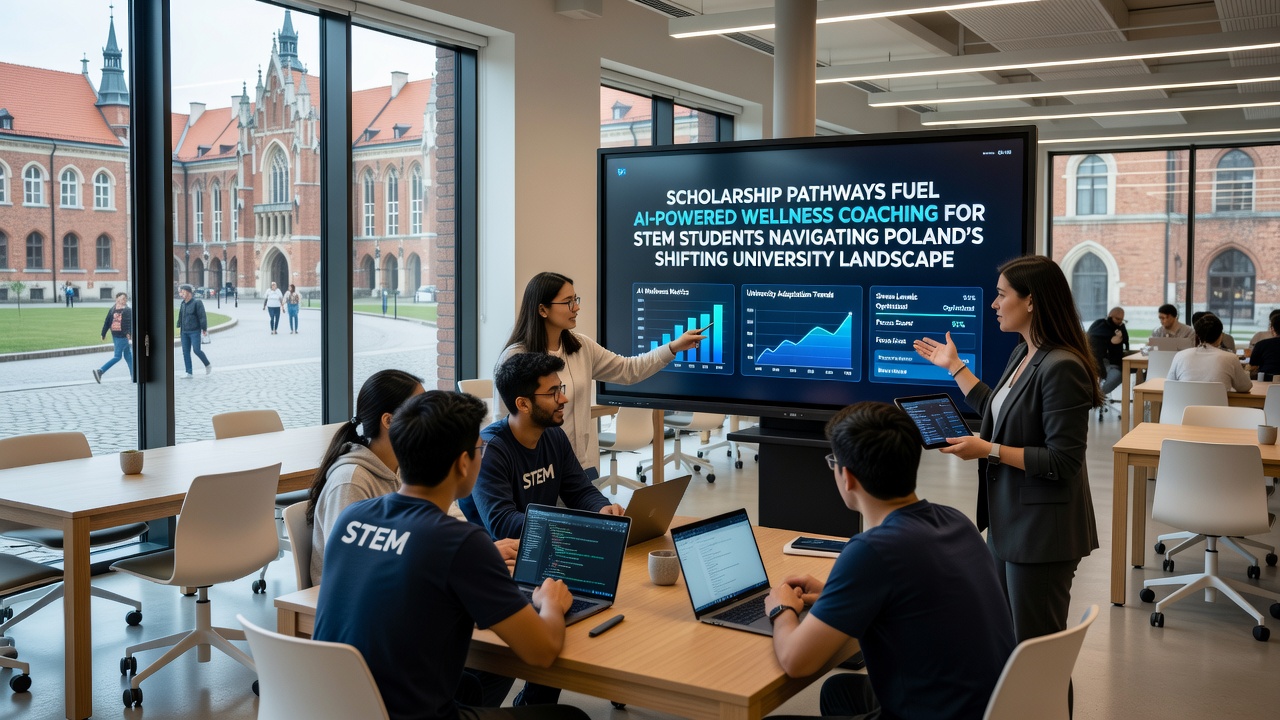
Scholarship Pathways Fuel AI-Powered Wellness Coaching for STEM Students Navigating Poland's Shifting University Landscape
Scholarship programs in Poland have expanded pathways that connect financial support directly to AI-driven wellness coaching services for STEM students facing ongoing university reforms. These initiatives align with changes in higher education structures that began accelerating after 2023 and continue through October 2026 as institutions adjust curricula, assessment methods, and international enrollment targets. Data from the Polish Ministry of Education and Science indicates that over 12,000 STEM students received targeted scholarships in the 2025-2026 academic year, with many allocations including access to digital platforms that monitor stress indicators and provide personalized coaching modules.
University Reforms Reshape Support Needs
Poland's higher education system has undergone multiple adjustments since the implementation of the 2018 Law on Higher Education and Science, and further modifications rolled out in 2025 introduced new quality assurance metrics that affect STEM program accreditation. Students in fields such as computer science, engineering, and biotechnology now encounter revised credit requirements and mandatory interdisciplinary modules, which create additional academic pressure. Observers note that scholarship administrators responded by embedding wellness components into funding packages, particularly those that incorporate artificial intelligence systems capable of analyzing user-input data on sleep patterns, study hours, and emotional states to generate tailored intervention suggestions.
One study conducted by researchers at Warsaw University of Technology tracked 450 scholarship recipients across three semesters and found measurable differences in retention rates when AI coaching tools were included versus traditional mentoring alone. The integration occurs through university partnerships with technology providers that deliver apps and web platforms meeting data protection standards set by the European Union's GDPR framework. Students log daily inputs and receive prompts that adjust based on performance trends, while coaches review aggregated reports to schedule live sessions when thresholds indicate elevated risk.
AI Systems Deliver Targeted Coaching
AI-powered platforms used in these scholarship pathways rely on machine learning algorithms trained on anonymized datasets from previous student cohorts, allowing the systems to predict periods of high stress during exam seasons or project deadlines. According to figures released by the European Commission Directorate-General for Education, Youth, Sport and Culture, similar models have been piloted in multiple member states with reported improvements in student-reported wellbeing scores. In the Polish context, the tools focus specifically on STEM disciplines where laboratory work and coding assignments often extend into irregular hours, and the platforms offer features such as automated scheduling for virtual check-ins and resource libraries that cover nutrition, time management, and mindfulness techniques.
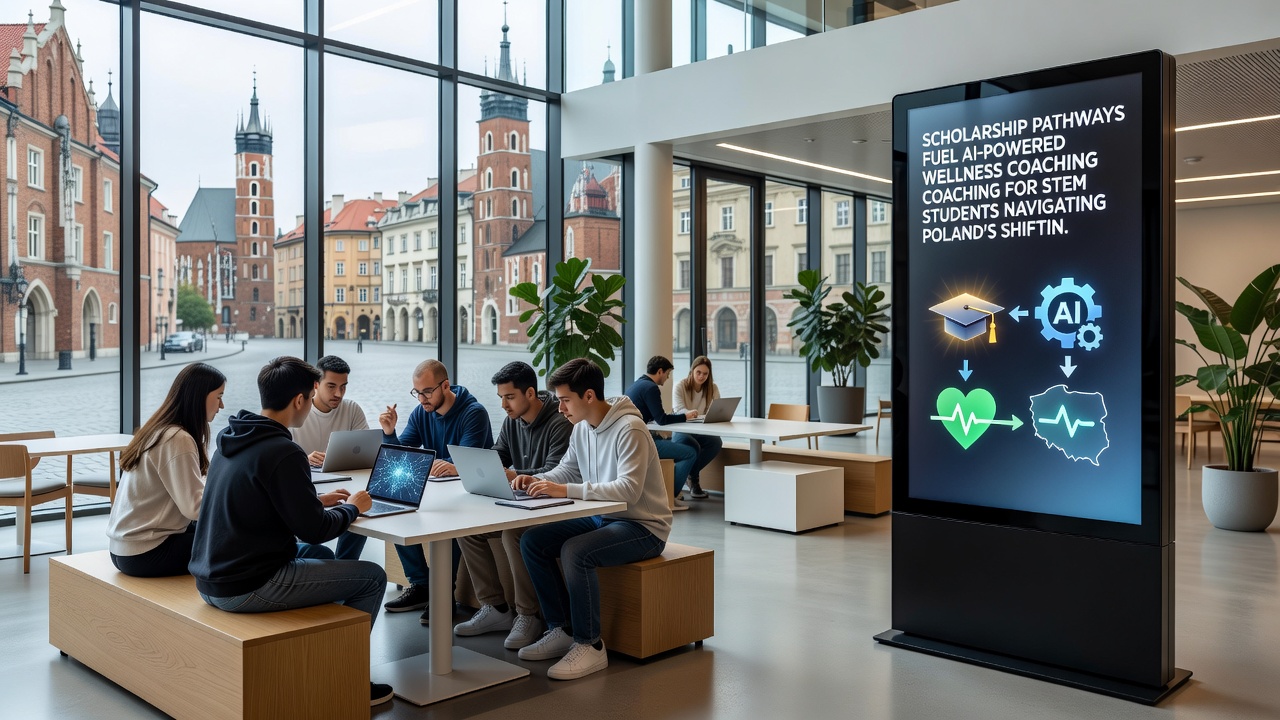
Scholarship administrators coordinate with academic departments to ensure the coaching aligns with curriculum timelines, and data sharing agreements specify that individual student information remains confidential unless consent is granted for intervention. Those who have examined the implementation report that early adoption rates reached 68 percent among eligible STEM scholarship holders by the start of the 2026 academic year, with usage patterns showing higher engagement during mid-term assessment periods.
Funding Sources and Eligibility Criteria
Multiple funding streams support these combined scholarship and coaching programs. National grants from the National Centre for Research and Development supplement university-specific endowments, while some allocations draw from European Structural and Investment Funds designated for education modernization. Eligibility typically requires enrollment in accredited STEM programs, demonstration of financial need, and agreement to participate in the wellness tracking components. Selection committees review academic records alongside statements that outline how applicants plan to balance rigorous technical coursework with personal health maintenance.
International students constitute a growing segment of recipients as Polish universities increase English-taught STEM offerings to meet enrollment targets set for 2026. Reports from the OECD Education at a Glance series show that Poland's share of international tertiary students rose steadily between 2020 and 2025, prompting scholarship designs that address cultural adjustment challenges alongside academic demands. The AI coaching interfaces include language options and content modules that reference regional support networks, which helps maintain continuity for students arriving from outside the European Union.
Outcomes Observed in Early Data
Initial evaluations conducted by independent research teams at institutions such as Jagiellonian University have documented correlations between sustained use of the AI wellness tools and improved grade point averages among scholarship cohorts. These findings appear in preliminary reports that compare participants against control groups who received funding without the coaching add-on. Metrics tracked include course completion rates, instances of academic probation, and self-reported measures collected through standardized wellbeing surveys administered at the start and end of each semester.
Program coordinators emphasize that the AI component serves as a supplement rather than a replacement for human advisors, and escalation protocols route complex cases to licensed counselors when patterns exceed the system's calibrated parameters. Training sessions for both students and faculty ensure that everyone understands data handling procedures and the limits of algorithmic recommendations. As October 2026 approaches, additional cohorts are scheduled to enter the programs, and administrators continue refining eligibility criteria based on feedback collected from prior participants.
Conclusion
Scholarship structures that integrate AI-powered wellness coaching represent one response to the evolving demands placed on STEM students within Poland's changing university environment. Continued monitoring through 2026 and beyond will provide further data on how these combined supports influence academic persistence and overall student experience across different institutions and disciplines.