Alex Beck · 18 September 2026
Polish Exam Adjustments and Higher Education Updates Transform Tutoring Landscape for STEM and Sustainability Fields
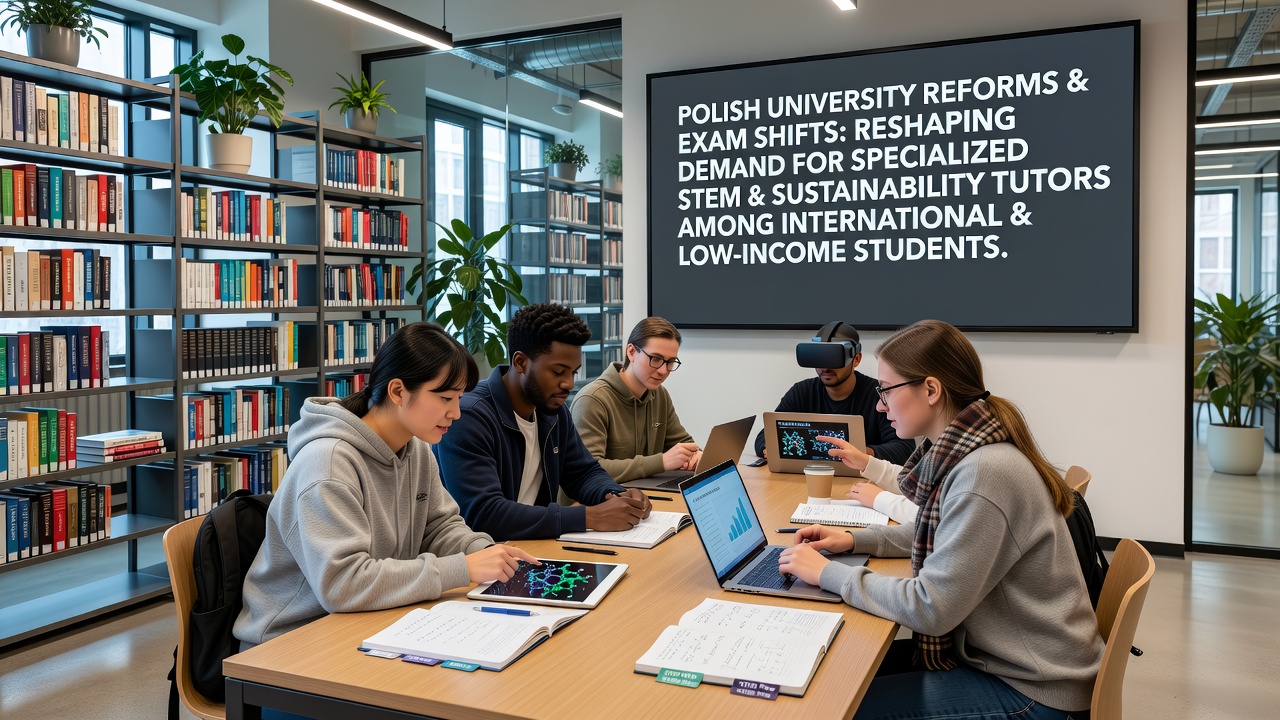
Poland's education authorities introduced adjustments to the matura examination structure in 2025, with full implementation scheduled for September 2026. These modifications place greater emphasis on applied problem-solving in mathematics and integrated science sections, while university admission rules now prioritize demonstrated competencies in sustainability-related projects for certain degree programs. Data from the Polish Ministry of Education shows that international student applications to Polish universities rose by 18 percent between 2023 and 2025, and low-income domestic applicants increased their enrollment in preparatory programs by 22 percent during the same period. The revised matura format requires students to complete extended tasks that combine physics, chemistry, and environmental data analysis. Observers note that this structure has prompted families to seek tutors who specialize in cross-disciplinary STEM instruction rather than single-subject support. University reforms further require applicants to submit portfolios that document sustainability initiatives, which has expanded demand for tutors capable of guiding project development alongside exam preparation. International students from outside the European Union often encounter language and curriculum gaps when adapting to Polish standards. Reports from the European Education Area indicate that targeted tutoring in English-language STEM modules helps these students meet both matura-equivalent requirements and university entry thresholds. Low-income Polish students face parallel challenges because new admission criteria reward extracurricular sustainability work that requires access to resources and mentorship not always available in underfunded schools.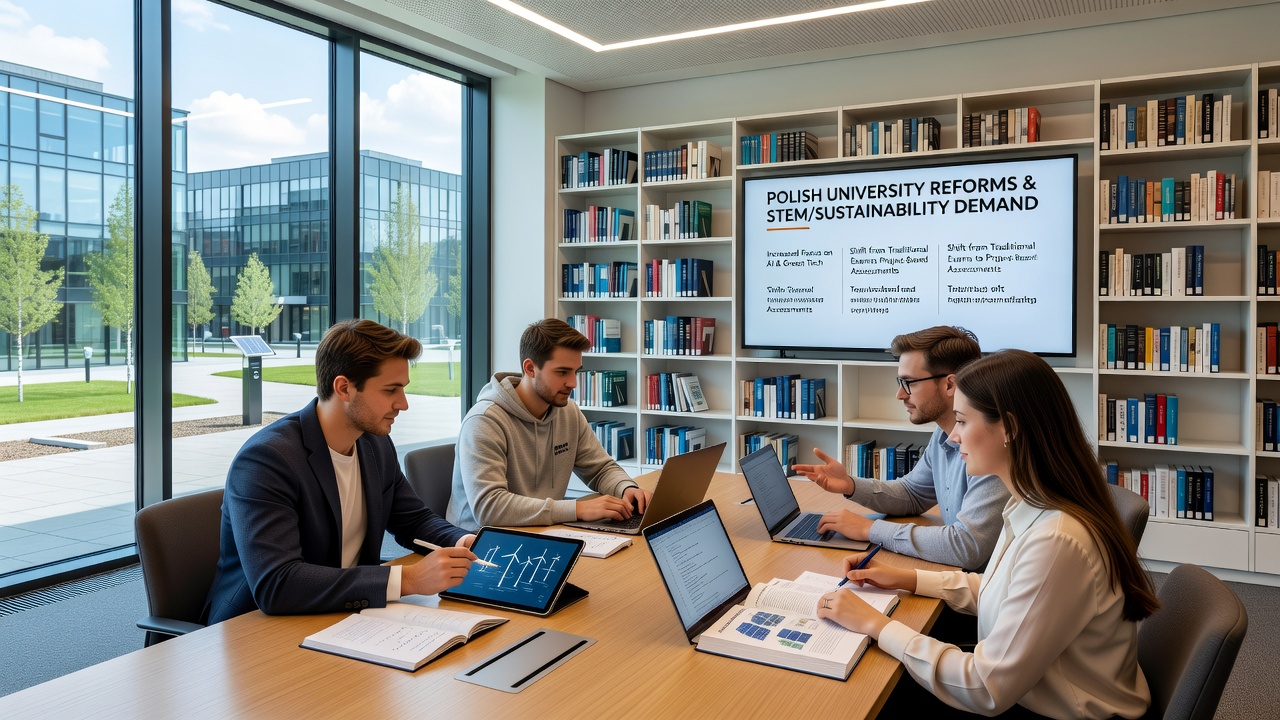
Poland's education authorities introduced adjustments to the matura examination structure in 2025, with full implementation scheduled for September 2026. These modifications place greater emphasis on applied problem-solving in mathematics and integrated science sections, while university admission rules now prioritize demonstrated competencies in sustainability-related projects for certain degree programs. Data from the Polish Ministry of Education shows that international student applications to Polish universities rose by 18 percent between 2023 and 2025, and low-income domestic applicants increased their enrollment in preparatory programs by 22 percent during the same period. The revised matura format requires students to complete extended tasks that combine physics, chemistry, and environmental data analysis. Observers note that this structure has prompted families to seek tutors who specialize in cross-disciplinary STEM instruction rather than single-subject support. University reforms further require applicants to submit portfolios that document sustainability initiatives, which has expanded demand for tutors capable of guiding project development alongside exam preparation. International students from outside the European Union often encounter language and curriculum gaps when adapting to Polish standards. Reports from the European Education Area indicate that targeted tutoring in English-language STEM modules helps these students meet both matura-equivalent requirements and university entry thresholds. Low-income Polish students face parallel challenges because new admission criteria reward extracurricular sustainability work that requires access to resources and mentorship not always available in underfunded schools.Matura Changes and Their Direct Effects on Subject Demand
The updated exam now allocates 35 percent of the mathematics score to modeling exercises that incorporate real-world sustainability scenarios, such as carbon footprint calculations and renewable energy optimization. Students who previously focused on rote calculation methods have shifted toward tutors who integrate data interpretation with environmental case studies. Figures from the Central Examination Board reveal that enrollment in specialized STEM tutoring sessions grew 31 percent in the 2025 academic year compared with teh previous period. Sustainability topics appear across multiple subjects, including biology and geography, creating a need for tutors who can coordinate instruction across these areas. Those who have studied the reform documents observe that students from lower-income households show particular interest in tutors offering bundled STEM and sustainability modules because single-subject sessions no longer align with the integrated exam format.University Reforms and Portfolio Requirements
New university admission regulations effective in September 2026 require applicants to certain engineering and environmental science programs to present evidence of completed sustainability projects. This policy has increased requests for tutors who assist with project design, documentation, and presentation skills in addition to exam coaching. International applicants benefit from tutors familiar with both Polish portfolio standards and international project frameworks, while low-income students often rely on subsidized tutoring programs to build comparable portfolios. Research from the OECD Education Working Papers series highlights that countries implementing similar portfolio-based admissions see tutoring demand rise most sharply among students without prior access to research facilities or mentorship networks. In Poland, this pattern appears in urban centers where international student populations concentrate and in rural regions where low-income applicants seek remote tutoring options.